
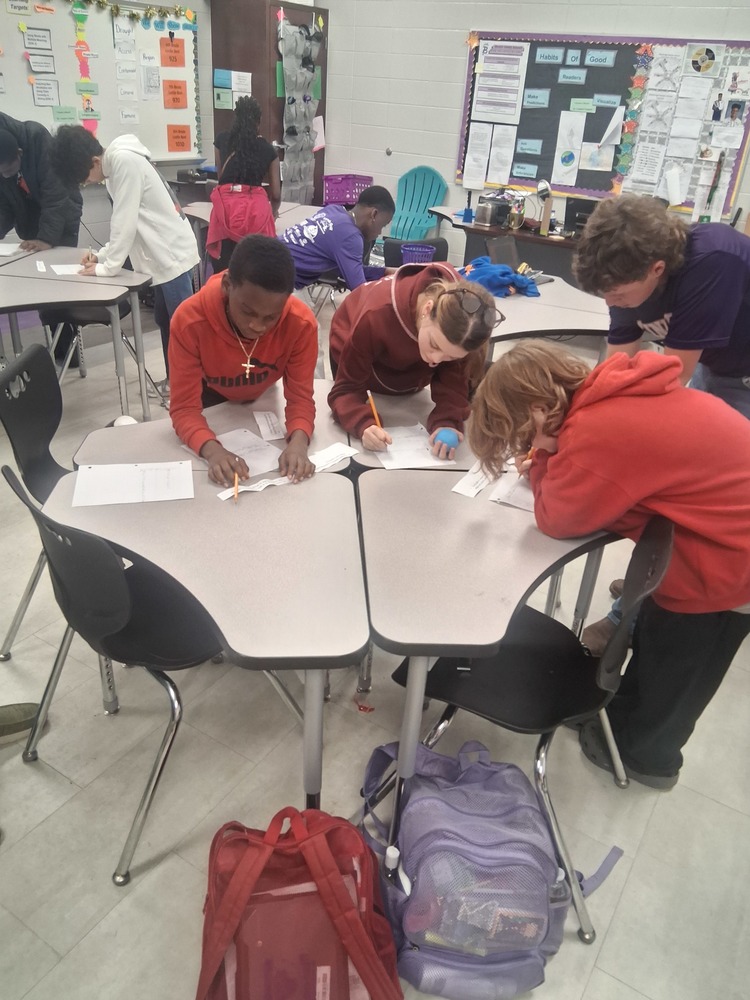
In 6th grade math, students are diving into one of the most practical and visual branches of geometry: measuring two-dimensional and three-dimensional shapes. Right now, students are building a foundation in area. They've started with basic rectangles and triangles, using formulas like Area = length × width or Area = ½ × base × height. These fundamental concepts are essential because they show up everywhere, from calculating how much paint you need for a wall to figuring out the size of a garden plot. Understanding area helps students see math as a tool for solving real-world problems, and it becomes even more powerful when students learn to work with composite shapes, breaking down irregular figures into smaller, familiar pieces to find total area. This skill teaches strategic thinking and shows how complex problems can be simplified.
Finally, our students are exploring volume, which extends these 2D area concepts into the third dimension. For example, how much water fills a container or how much material is needed to fill a box. Students discover that volume formulas often build on their understanding of area. Surface area complements this by measuring the total area of all the faces of a 3D shape, similar to calculating how much wrapping paper is needed to cover a box. Together, area, surface area, and volume form a powerful toolkit for understanding and measuring the world around you, and these concepts directly align with Georgia's 6th Grade Mathematics Standards.
It is important to encourage children to show their work and explain their thinking, not just finding the answer. Have your students practice regularly on GA Experience Online at https://www.gaexperienceonline.com/, where they can access Georgia-aligned practice problems and released Milestones questions which is an excellent tool to help prepare them for GMAS. Ask questions to reinforce understanding. Most importantly, stay positive about math because your encouragement and patience make a real difference in building your student's confidence and success.